For teachers
Old things turn out to be great art teachers: beautiful, made by real people, and full of choices kids can see and talk about.
A short video for teachers (2:28). It opens in Pioneer Square with public-domain historic photos (credited at the end), then covers what students can do, what we hope they take away, and where the pilot stands. Pilot draft, in development. Real footage and objects are labeled on screen. Every voice except Andrew’s is AI-generated. Captions start off; press Captions under any video to turn them on.
1
A typewriter, a 1940s TV and a painting of kittens were each made by real people who chose a shape, a color and a material. Students start with something familiar and learn to see the choices inside it.
2
Each object opens a bigger story: gold frames and Bakelite, Muybridge's horses and Degas, mosaics and pixels, Victorian pet portraits. Kids reach art history through things they can recognize.
3
Once students notice that someone chose the curve of a phone or the gray of a typewriter, they start seeing design in their classroom, their street and their home. That habit lasts longer than any fact.
4
Looking closely and drawing what is really there are skills students keep. The visit ends with a short, seated drawing session, and every station asks for a sketch.
The visit in three parts
Part 1 · Design · about 16 minutes
Old, beautiful design
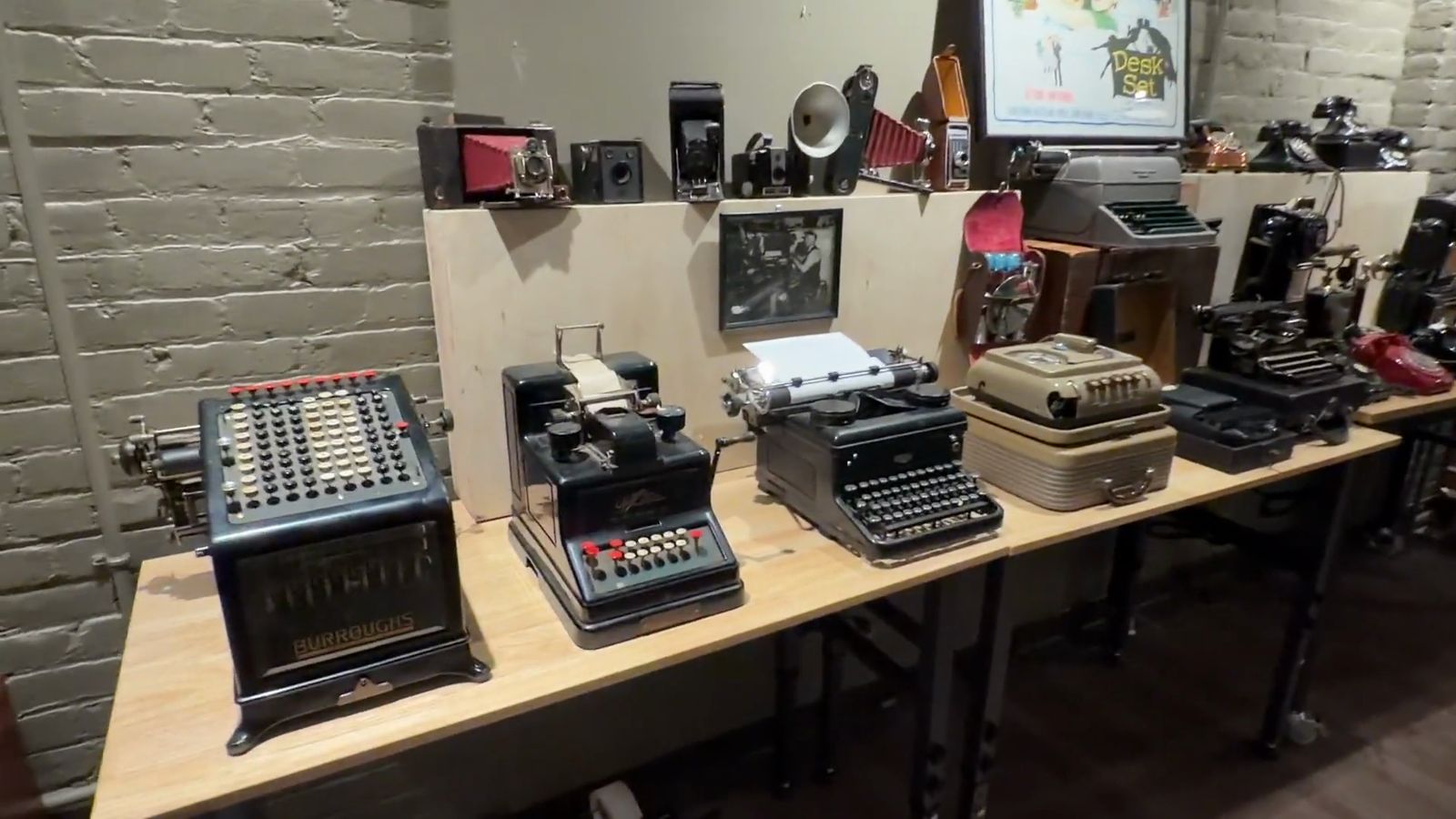
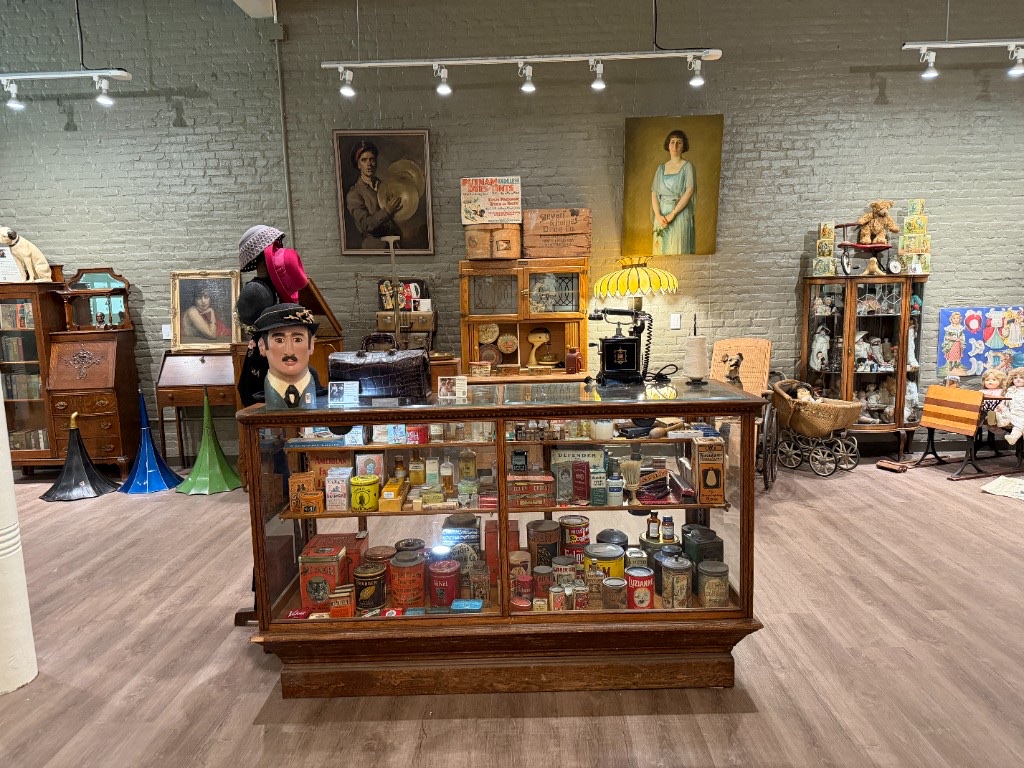
Typewriters, movie machines, TVs and games. Real people designed every one of them, and decided how it should look, feel and work.
Part 2 · Art · about 9 minutes
Paintings made by real people
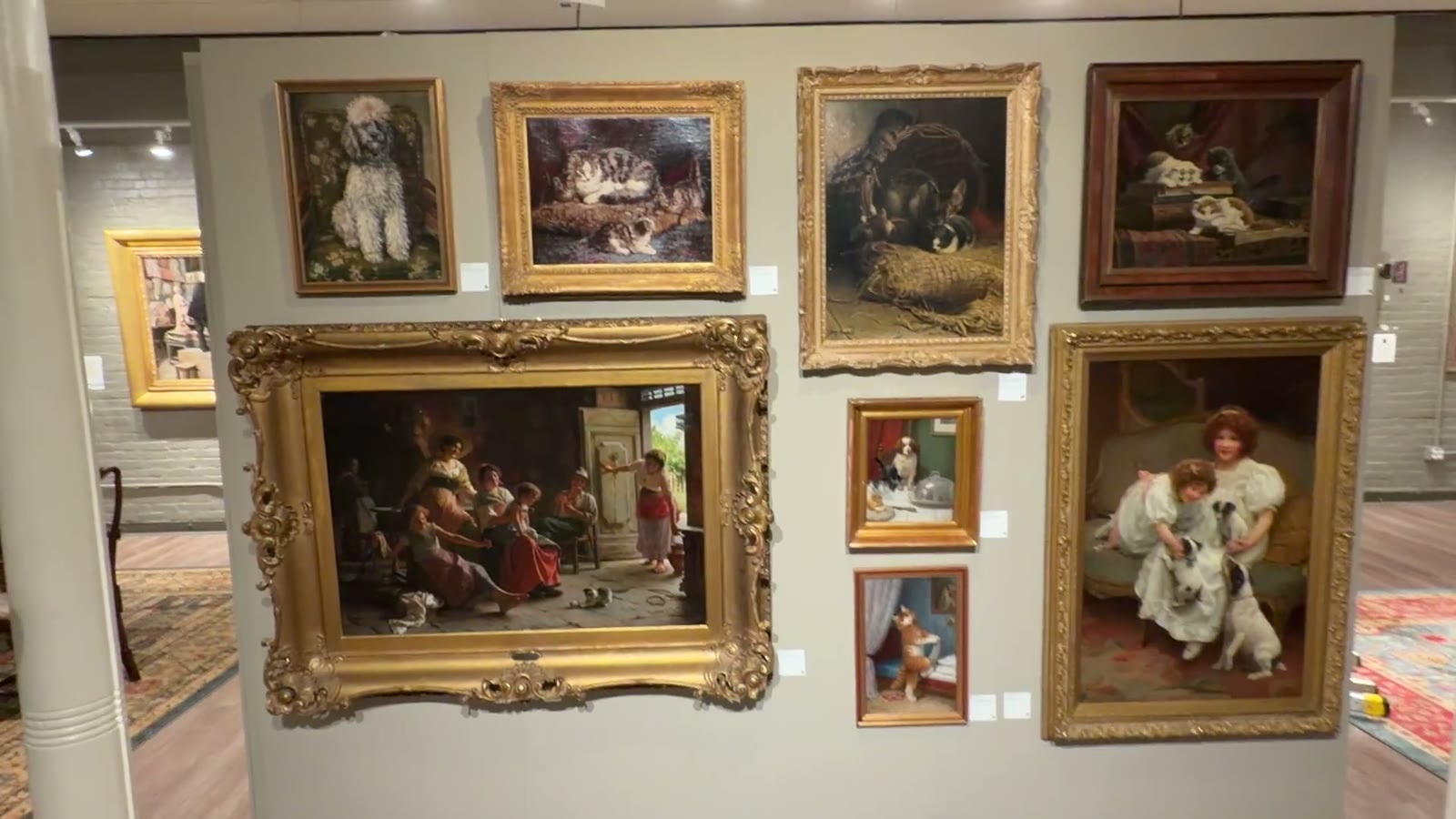
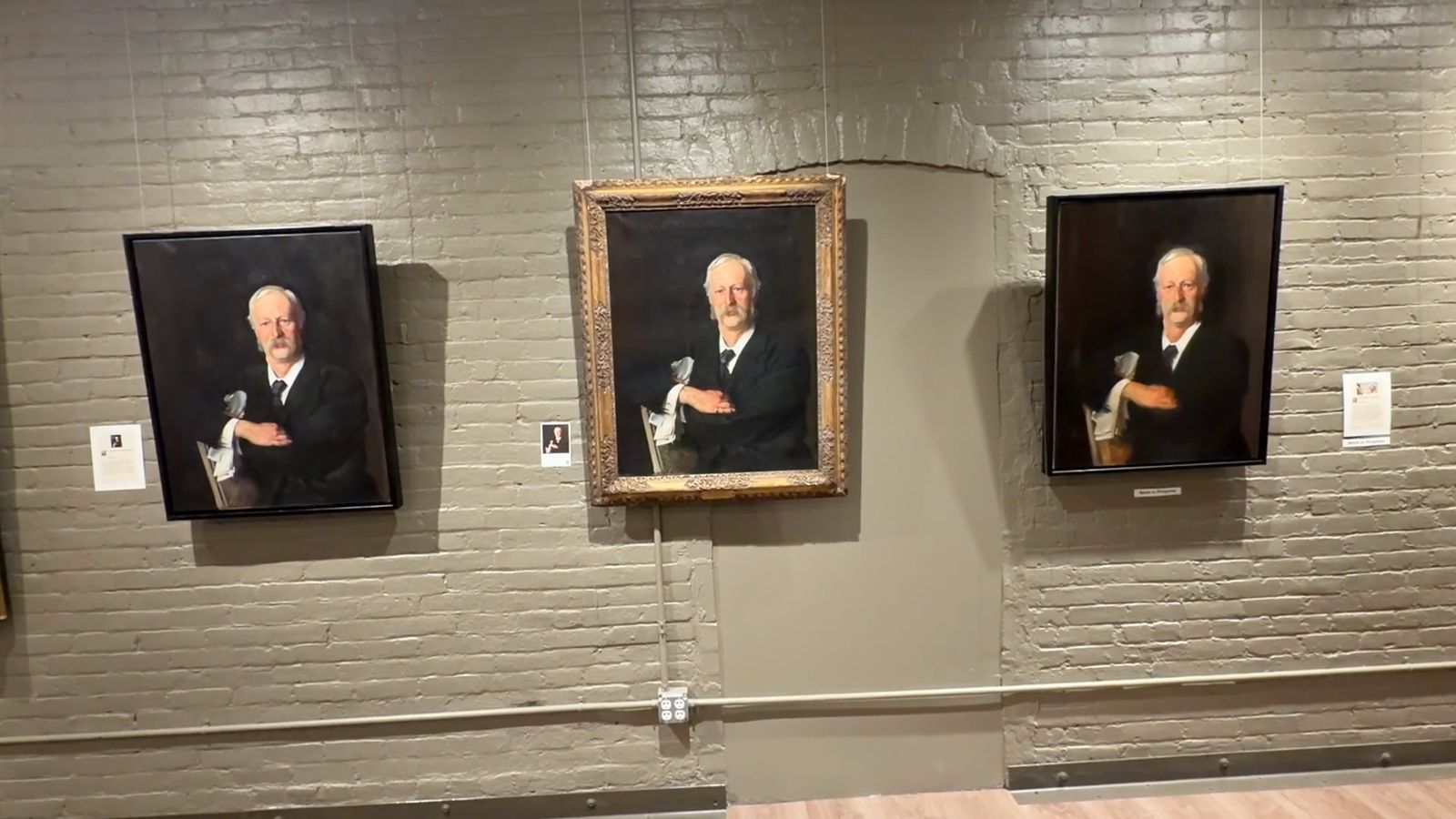
The AWWW Wall of cat and dog paintings, then Guess the Sargent. Painters make choices too: what you look at first, how fur feels, how an eye shines.
Part 3 · Drawing · about 15 minutes
Draw what you see
Back downstairs, likely on the mezzanine, sitting down: a pet portrait drawn from a printed copy of one of the paintings, starting from big shapes.
The 60-minute plan, on one screen, is on Plan a visit.
Who we are
Your class will be met by Kirsten, who leads our school visits and is your contact, with Noy and Neal. They’re Foundation staff who know these objects well. They aren’t trained teachers, and we’re building this program with teachers’ help.
Before any school visit, all three will complete child-safety training and background checks.
The plan: try it with a few classes, listen to what teachers and kids tell us, and keep improving how we help students take in what they see. If you bring a class, your honest notes shape the next version.
Ideas we’re considering
None of this is offered yet. These are things we’re thinking about, and teachers help us choose.
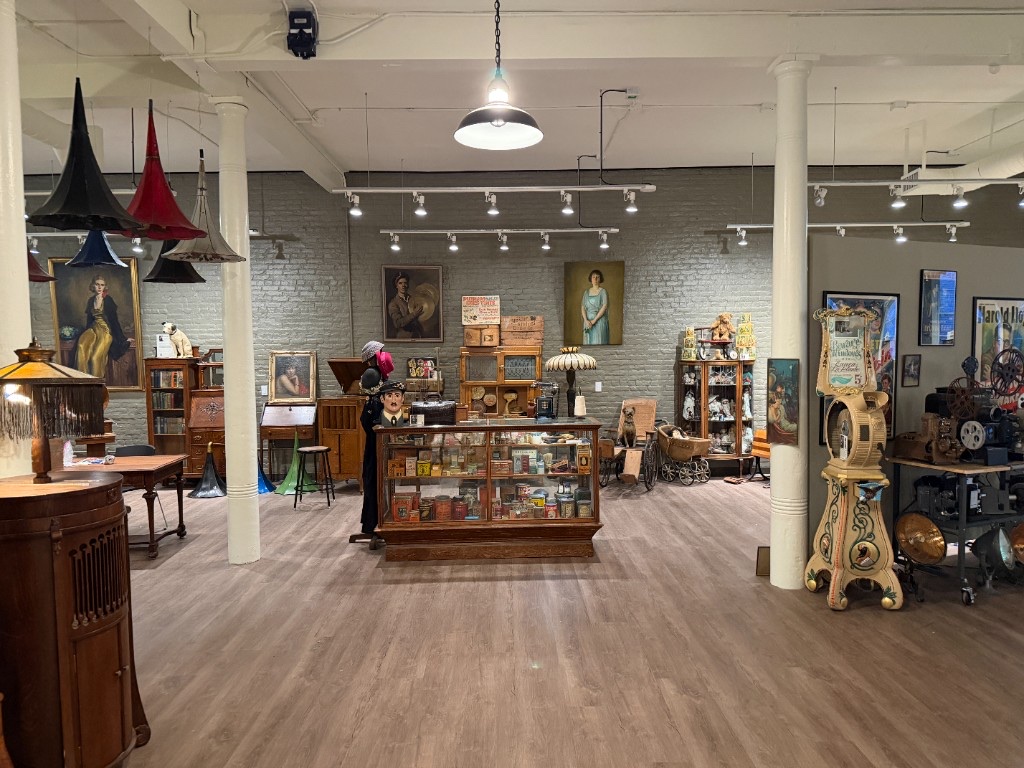
Bring two classes on the same day. The second starts 25 minutes after the first.
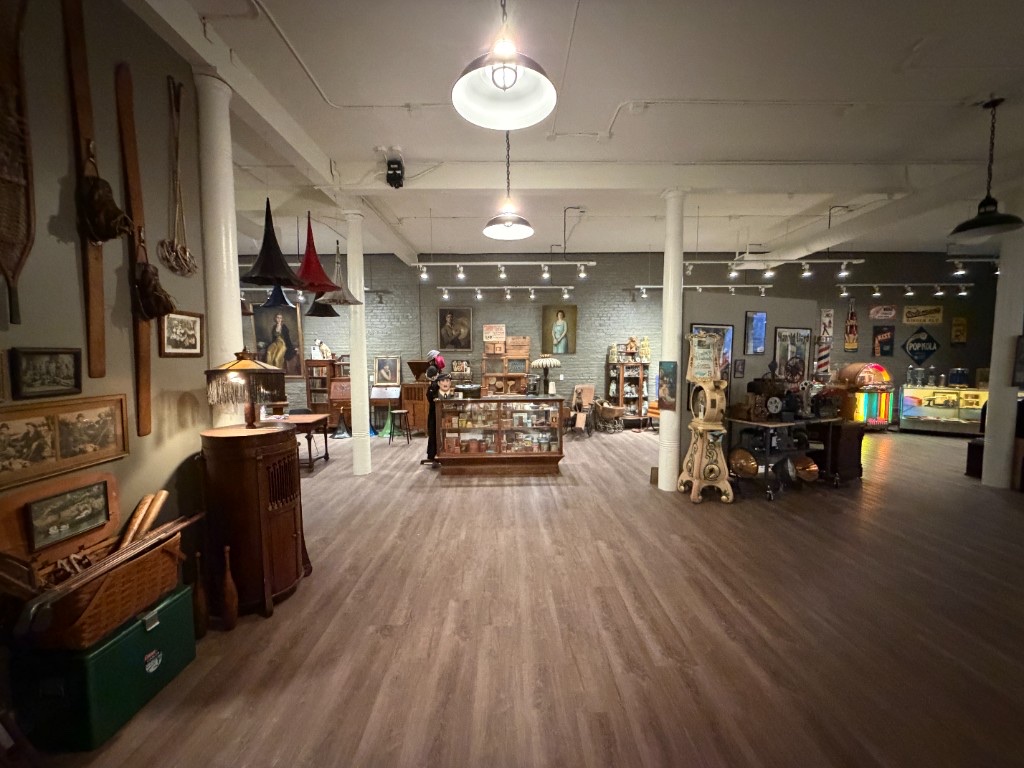
We'd like to pay back part of your school bus bill, up to a cap. Details TBD.
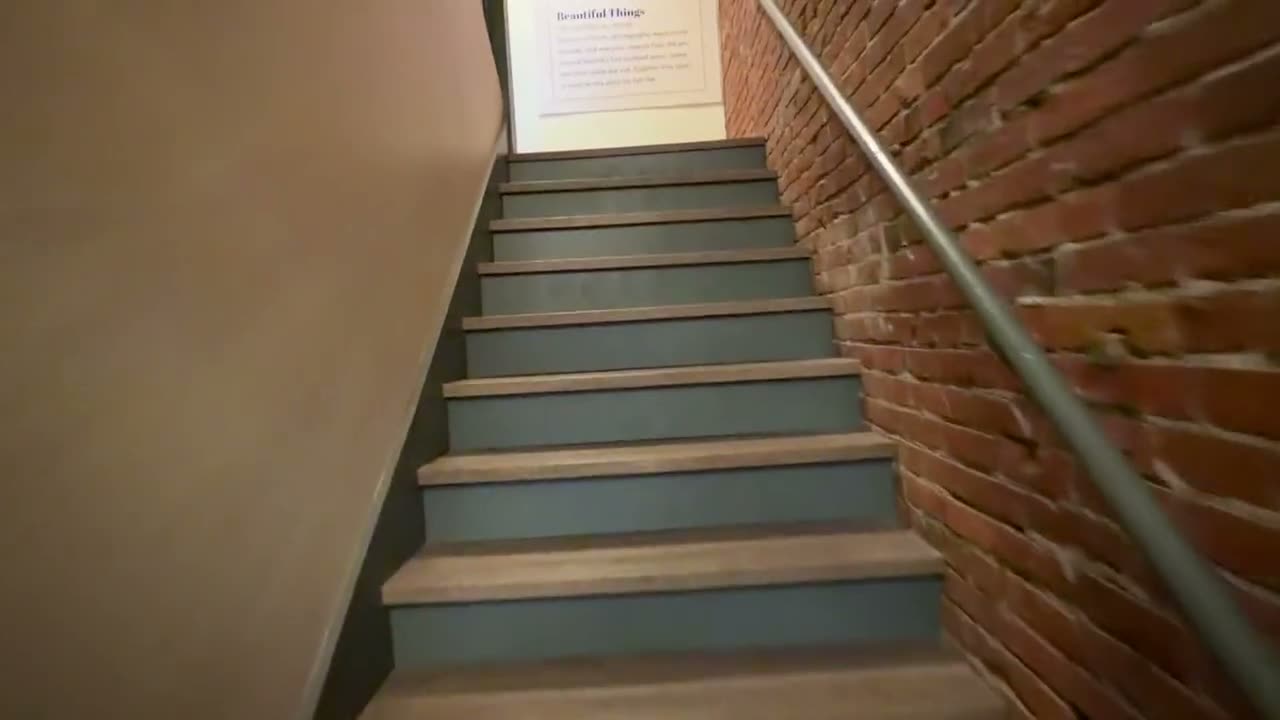
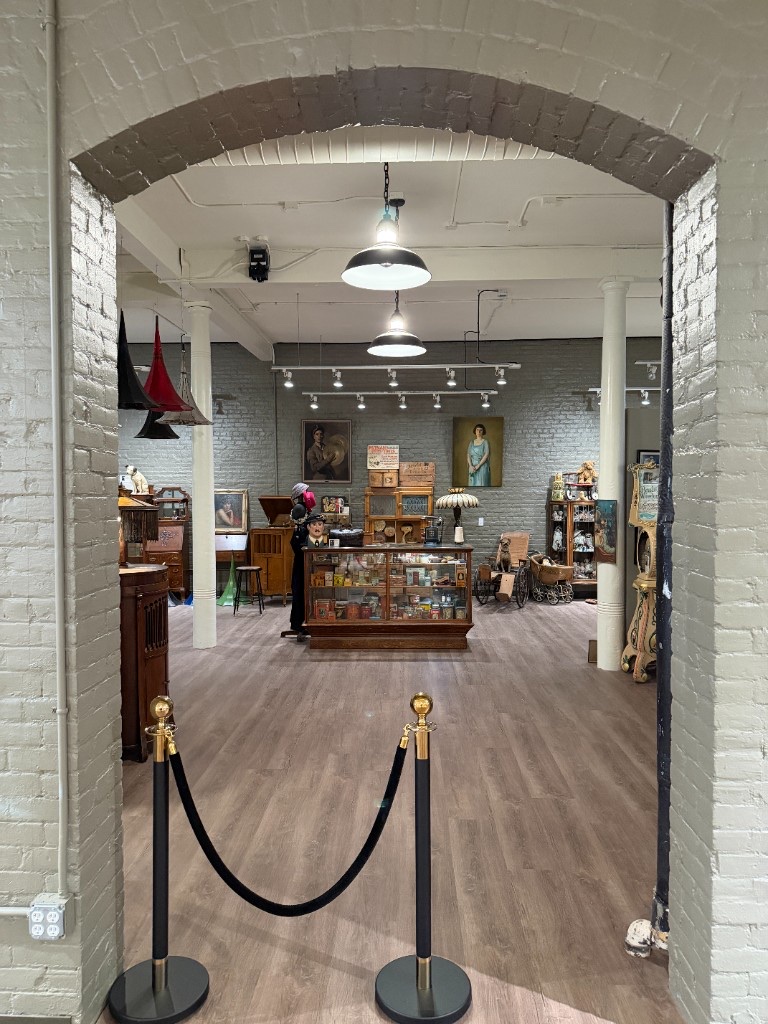
Beautiful Things is up a flight of stairs. We want a version downstairs too: a typewriter, a few objects, the videos and drawing.
A one-minute video of the door, the stairs, who meets you and the three rules, so kids know what to expect.
Kirsten, Noy and Neal plan child-safety training and background checks before school visits, then gallery-teaching training after that.
A few teachers try it first, free, and tell us plainly what to fix.
Videos, questions and slides for grades 3 to 5 and 6 to 8. Drafts are up now.
Pilot classes' drawings shown at the center for a few weeks, with real museum labels.
An after-school hour for art teachers to type, crank and play, then take the materials home.
An unused room downstairs could one day become a drawing studio or a take-it-apart table.
The family note in Spanish, Somali, Chinese, Vietnamese and Amharic.
Three teachers who look over the materials once a term and keep us honest.
Which of these would make the biggest difference for your class? What’s missing? One line is plenty.
Notes on the six kids’ videos
Each is under two minutes. Open one for its learning goal, questions and art-history link. To show them in class, use the before-your-visit player, which plays them in order. Kids can also watch them on the Explore page. The objects, paintings and gallery footage are real. Some illustrations and narrator voices were made with AI tools; every AI part is labeled on screen and in the credits, and listed under “How it was made.”
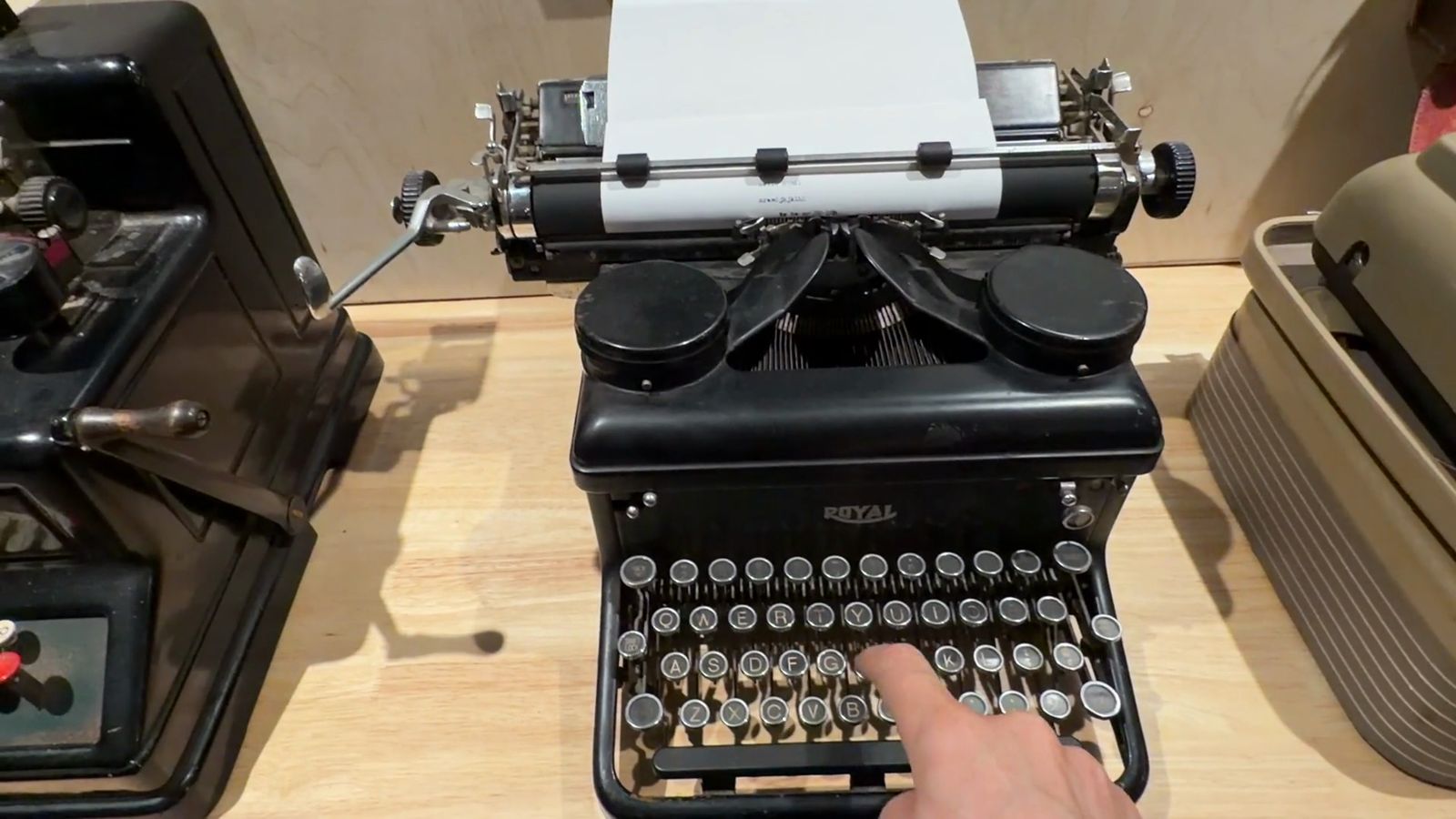
Part 1, station A: the typewriter table
Learning goal. Students see that an everyday machine was designed by people who made choices about shape, material and color, for how it would feel to use all day. They connect "no delete key" to working slowly and carefully.
Art-history link. In the late 1940s the industrial designer Henry Dreyfuss reshaped the Royal typewriter. He was one of the first designers to study how people's hands and eyes really work, and wrote about it in Designing for People (1955). Today art museums collect typewriters and telephones as design, next to paintings and sculpture.
The object tells its own story, in a warm, dry old voice, over typed-paper title cards, real photos of the Royal and Corona typewriters, and Andrew's tour footage.
Voices: Typewriter: ElevenLabs stock voice "Bill". Andrew: his own voice, from the tour.
AI-made parts: Three illustrations (a designer's drafting table, a writer at a kitchen table, a newsroom), two with added motion. Each is labeled on screen.
Part 1, station C: TVs as furniture
Learning goal. Students read an object for design clues (material, shape, frame) and use them as evidence for why it looks the way it does. Brand-new 1940s technology was dressed to look familiar so it would feel welcome at home.
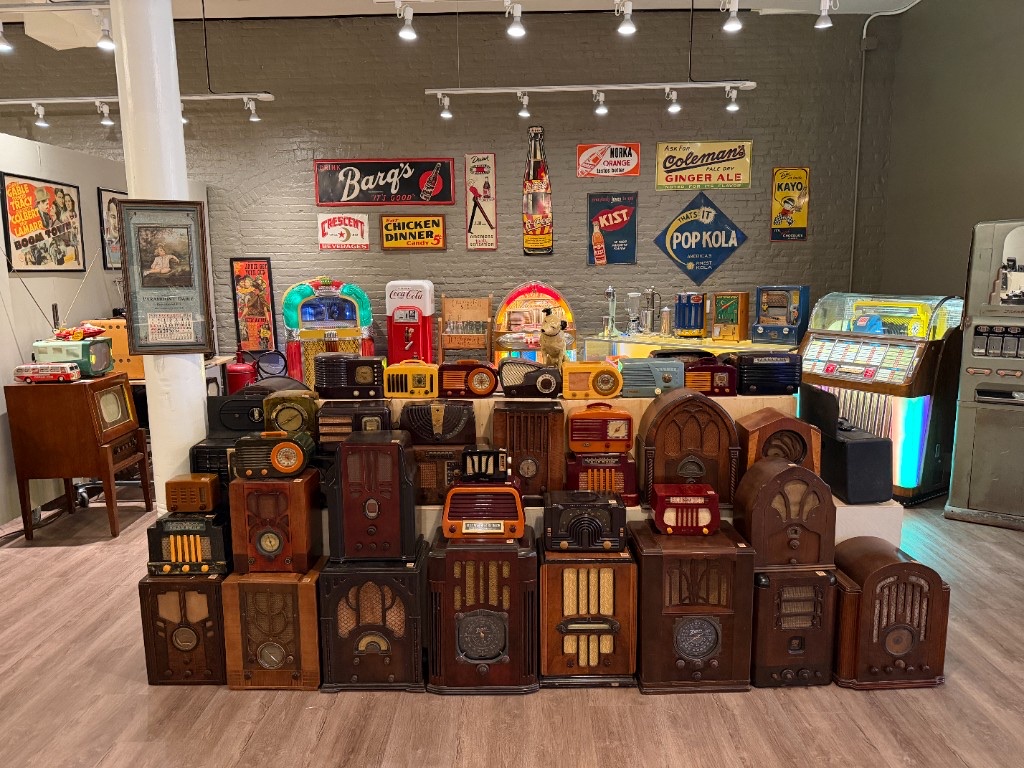
Art-history link. For centuries gilded frames have told viewers "this is precious, look closely," and the TV's gold ring borrows that signal. Bakelite, one of the first plastics, belongs to the same 1930s and 1940s Art Deco and Streamline era as chrome diners and curved radios. It let designers mold curves that would have been too hard or too costly to carve.
A fast-cut design detective: four clues (wood, the round screen, the gold ring, Bakelite), case-file stamps, a magnifying lens, and quick cuts across six real TVs from the exhibition.
Voices: Detective: ElevenLabs stock voice "Jessica".
AI-made parts: Two illustrations, a 1940s living room (with added motion) and a Bakelite mold being pressed, both labeled on screen. The picture-tube diagram is drawn in code.
Part 1, station B: movies you crank
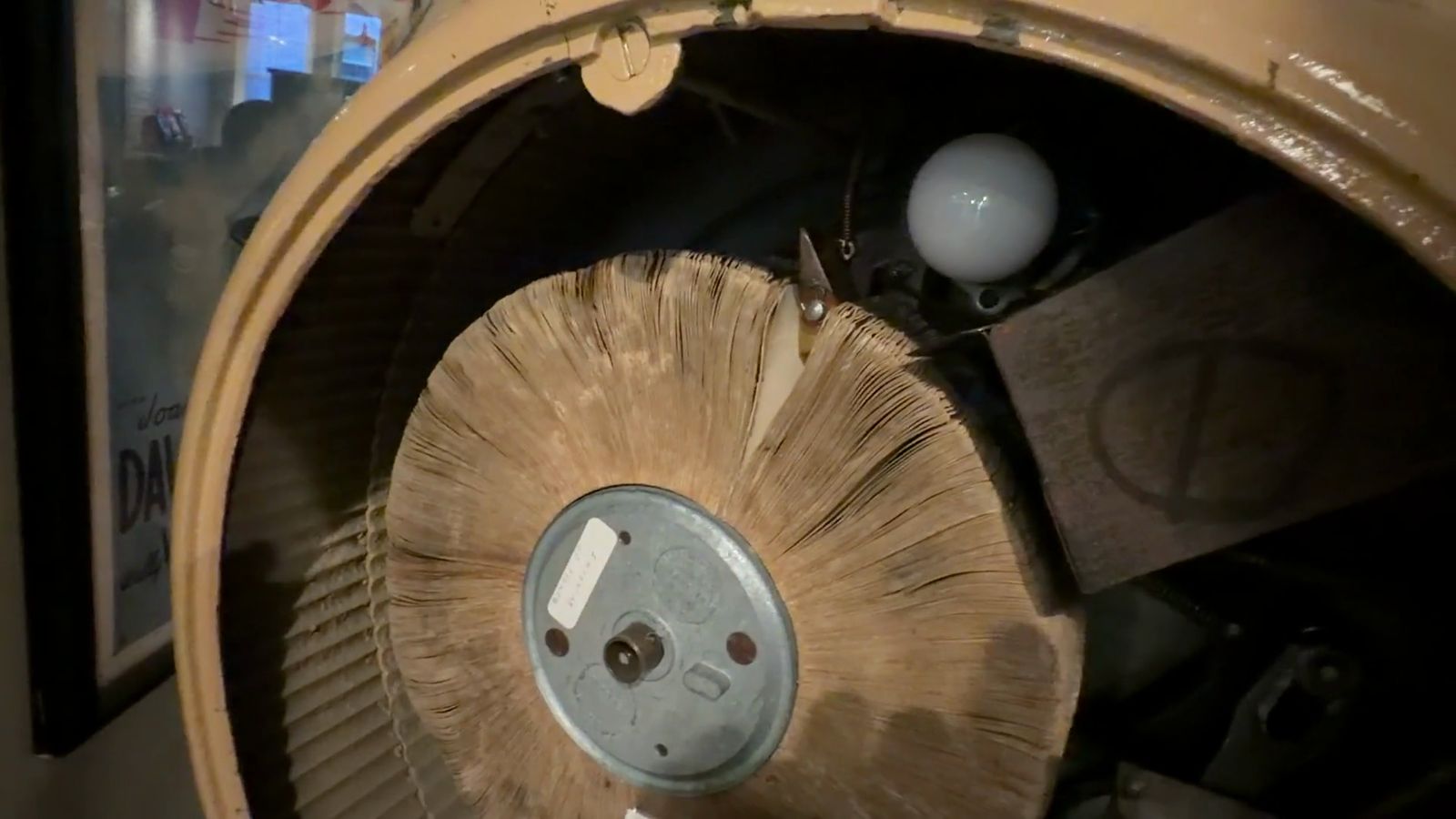
Learning goal. Students learn that a movie is a series of still pictures shown quickly, that the brain blends them into motion, and that photography changed how artists understood movement.
Art-history link. Before Muybridge's 1878 photographs, painters often showed galloping horses with all four legs stretched out like a rocking horse, as in Géricault's The Derby at Epsom (1821). The photos showed the legs tucked underneath instead. Edgar Degas, who painted racehorses again and again, used Muybridge's pictures to get them right.
A bright explainer built almost entirely from real material: Andrew's footage of the Mutoscope and projectors, his own lines from the tour, Muybridge's 1878 horse photographs and a Degas painting. It ends with a sticky-note flipbook to try in class.
Voices: Host: an AI voice modeled on Andrew's (labeled on screen and in the credits). Andrew's three short lines are his real voice from the tour.
AI-made parts: No AI pictures. The flipbook is drawn in code; the photographs and the painting are public domain.
Part 1, station D: games and the first home computer
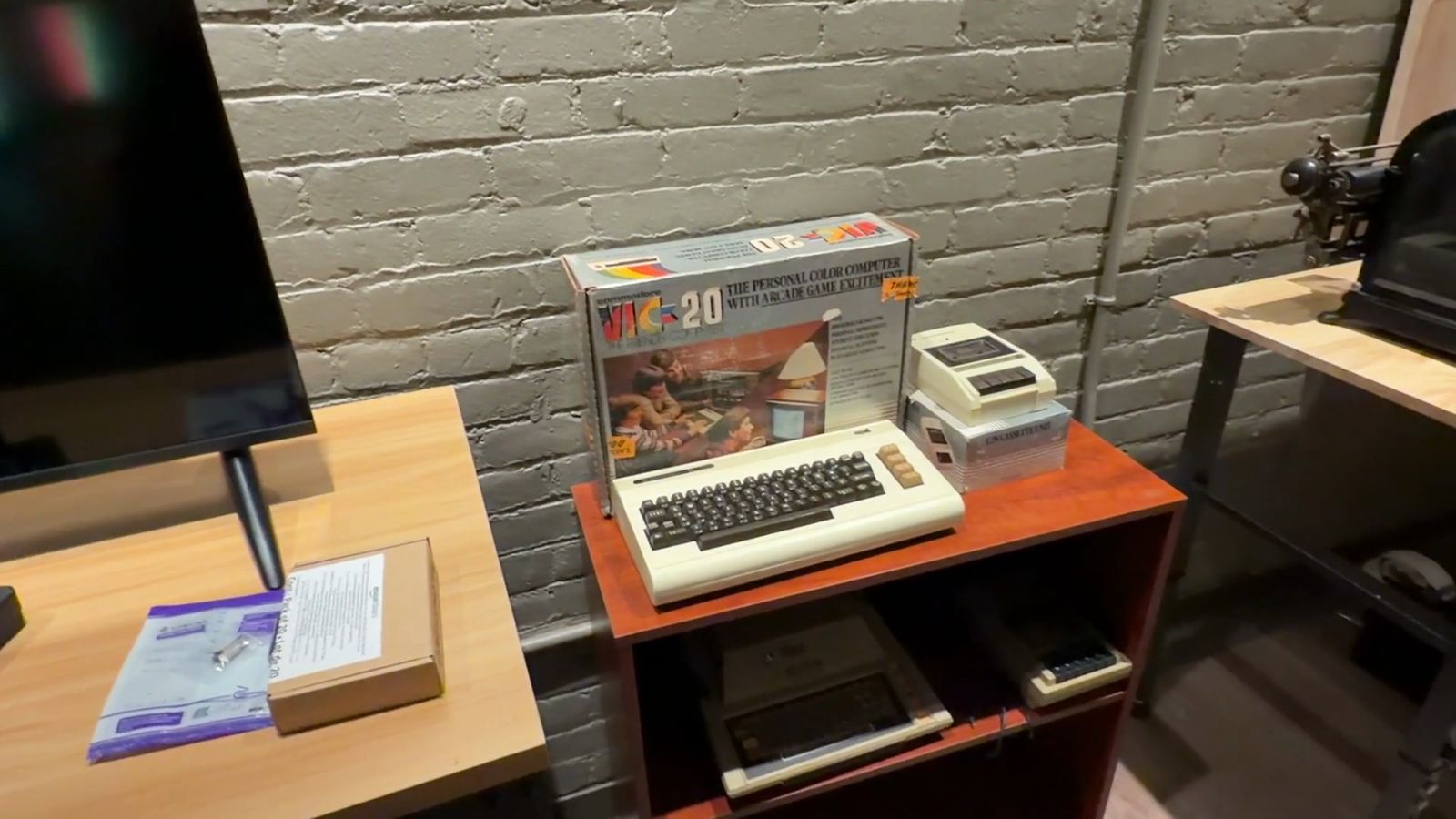
Learning goal. Students compare two designs made for the same job and explain the differences by who used them, what the technology could do, and when they were made. They see how a limit (very little memory) can create a whole art style.
Art-history link. Roman and Byzantine artists built pictures from thousands of small tiles called tesserae, much as early game artists built a tank from a few dozen squares. The Atari's wood-grain front repeats the trick the 1940s TV makers used: make new technology look like furniture.
An arcade versus screen: chunky pixel lettering, Atari orange and wood on black, chiptune music. It compares the real Atari 2600 with a made-up modern controller and builds a pixel tank that turns into a mosaic.
Voices: Narrator: ElevenLabs stock voice "Chris".
AI-made parts: Three illustrations, all labeled on screen: a 1970s living room, an invented unbranded modern controller, and designers' clay controller models (with added motion). The pixel art and mosaic are drawn in code.
Part 2, station H: the AWWW Wall
Learning goal. Students see that painters make choices to show texture (fur from thin stripes and tiny strokes) and life (a catchlight in the eye), and that pet portraits were how people remembered their animals before cameras.
Art-history link. The paintings: A Red Rose by Horatio Henry Couldery, about 1880 (his many cat paintings earned him the nickname Kitten Couldery); Cats by Jules Leroy; and Girl with Dog by Gustave Walther, 1873. Before photography, portraits of pets were a popular kind of painting in Victorian England and across Europe.
A warm museum visit with a storybook feel. Andrew's tour footage of the wall, then close looks at three real paintings: the fur, four kittens to find, and the tiny dot of light in a girl's eye. It ends by drawing a cat from shapes.
Voices: Narrator: ElevenLabs stock voice "Matilda". Andrew: his own voice, from the tour.
AI-made parts: One illustration of a dog painting a portrait of a dog, with added motion, labeled on screen. The shape cat is drawn in code.
Part 3, station J: the drawing studio
Learning goal. Students practice looking more than drawing: contour lines, simplifying to big shapes, working big to small, and value (light and dark).
Art-history link. Blind and slow contour drawing was made popular by the teacher Kimon Nicolaïdes in The Natural Way to Draw (1941), and art classes still use it to train looking. The drawing skills sheet follows the same four steps as the video.
A friendly how-to-draw lesson in four steps with real objects: a contour of the Corona typewriter that traces itself, a squint that turns the 1949 Motorola TV into a box and a circle, big to small, and light and dark.
Voices: Narrator: ElevenLabs stock voice "Will".
AI-made parts: One illustration of kids sketching in a gallery, labeled on screen. The traced lines and shapes are drawn in code from the real photos.
Everything you need
A short video and three questions before, 60 minutes here, one drawing after.
Note for your principal (draft PDF)Every station, longer lessons, a cardboard project, vocabulary and grade bands.
Download PDFTwo versions, grades 3 to 5 and 6 to 8, with short clips from the gallery.
Download PDF (grades 3 to 5)Student sketch sheet for parts 1 and 2.
Download PDFPart 3: contour, big shapes, a pet portrait and a value scale.
Download PDFTwelve real things to find, with an answer key.
Download PDFOne page for each adult with a team.
Download PDFA one-page summary to share with your principal.
Download PDFMapped to the Washington State K-12 Arts Learning Standards (OSPI, 2017, National Core Arts Standards codes). The guide quotes each standard and shows where it happens on the trip.
Grades 3 to 5
Grades 6 to 8
This is a pilot draft, shared for feedback. Visit details such as booking, cost and group size are still being confirmed, and the guide marks each one [TO CONFIRM].