The typewriter table
Hands-on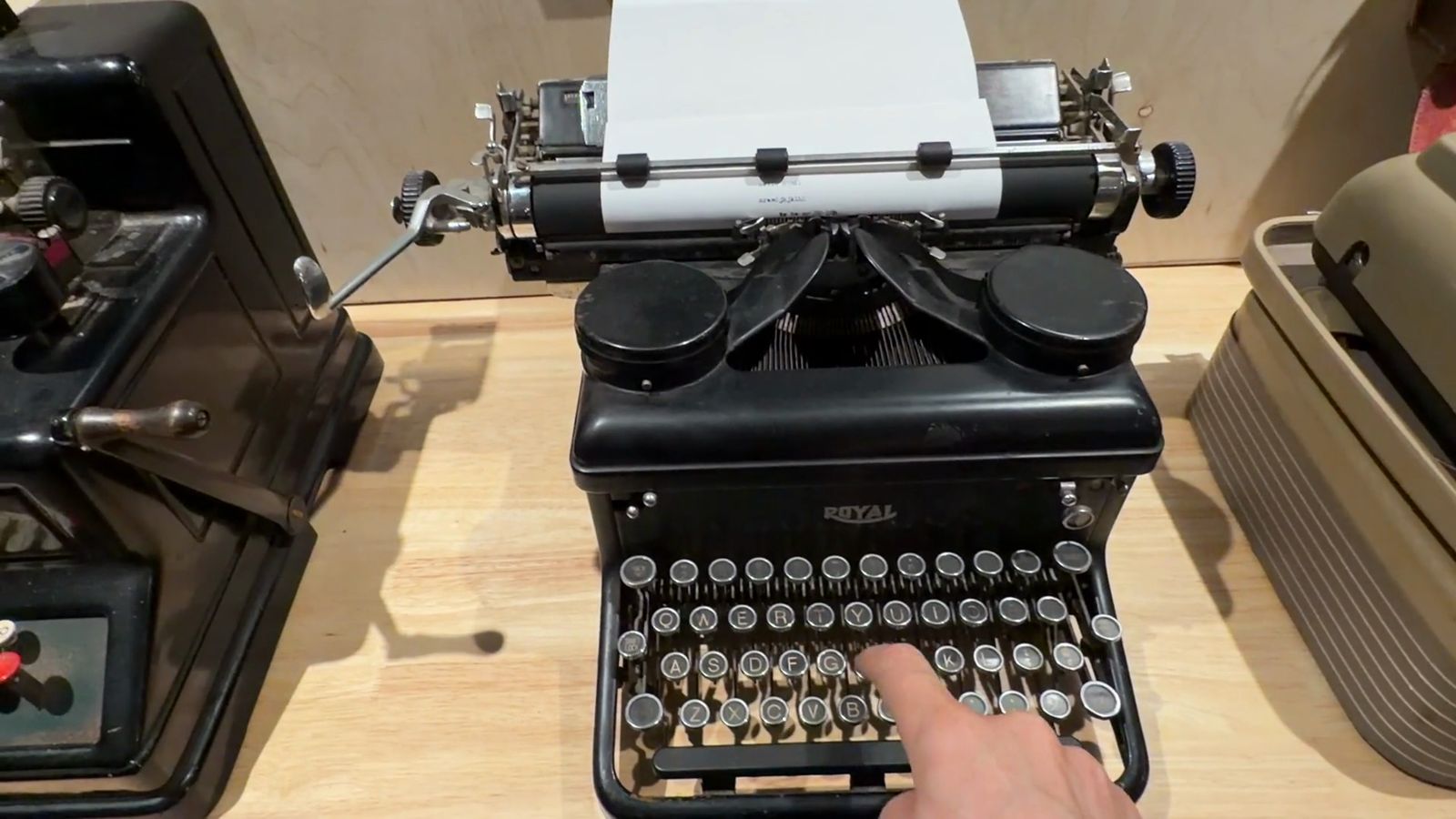
The design idea. Every letter on a typewriter was drawn by a person and cut into metal. On most typewriters every letter takes the same width, so a skinny i gets as much room as a wide W.
Try it. Type your name and one short line. There is no undo: a mistake stays on the paper. [TO CONFIRM]: which machines students may type on, and whether paper is provided.
- Look at the keys. Are they round or square? What is printed on them?
- Find the fan of thin metal arms. Each one carries one letter.
- Find the maker's name. Was it painted, stamped or stuck on?
Notice and wonder. “I notice the letters look like...” “I wonder who drew these letters, and why that shape.”
Sketch. Draw one key at its real size. Then copy your name the way the typewriter printed it.
Objects at this station
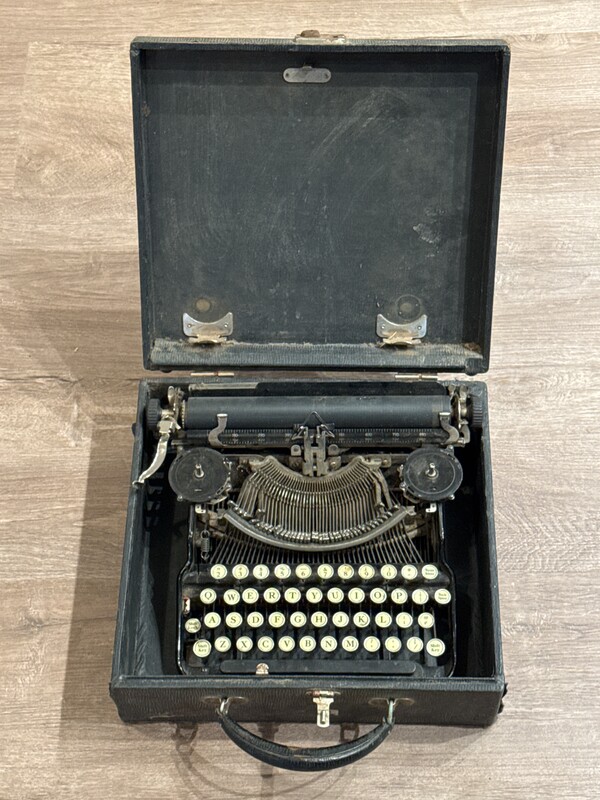
Corona Four portable typewriter, in its case
about 1926. Corona Typewriter Company, Groton, New York · object 4284
A typewriter made to travel. It packs into a case with a handle, so a reporter or a student could carry it.
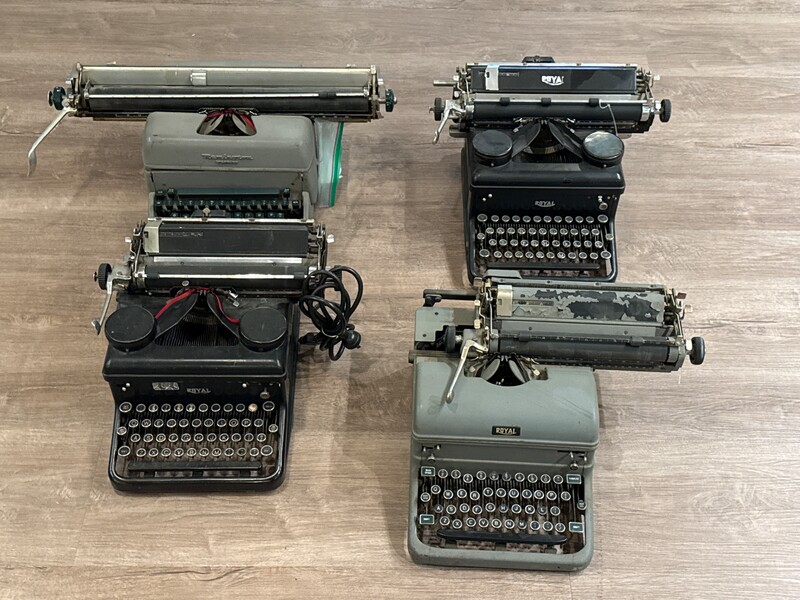
Royal and Remington typewriters
about 1938 to 1955. Royal Typewriter Company and Remington · object 4270
Office and portable machines. Big black desk machines like these filled offices for decades.
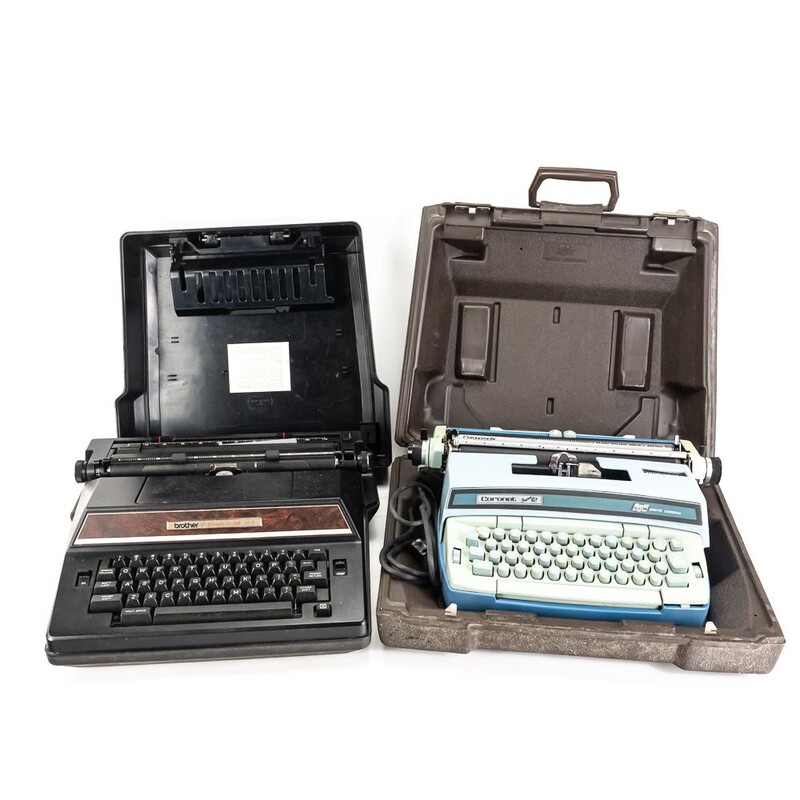
Brother Correct-O-Ball and Smith-Corona electric typewriters
mid-1970s. Brother and Smith-Corona · object 3986
Electric portables from fifty years later. Compare the keys and the shape of the case.
For the chaperone: Let each student type one line. Ask: what happens when you make a mistake?