
HOME
A Visual History
From the 1915 construction pit, to opening-day crowds, to the drop ceiling that buried it for thirty years.
Construction began in 1915 under architect B. Marcus Priteca, who would go on to design most of the great West Coast movie palaces.
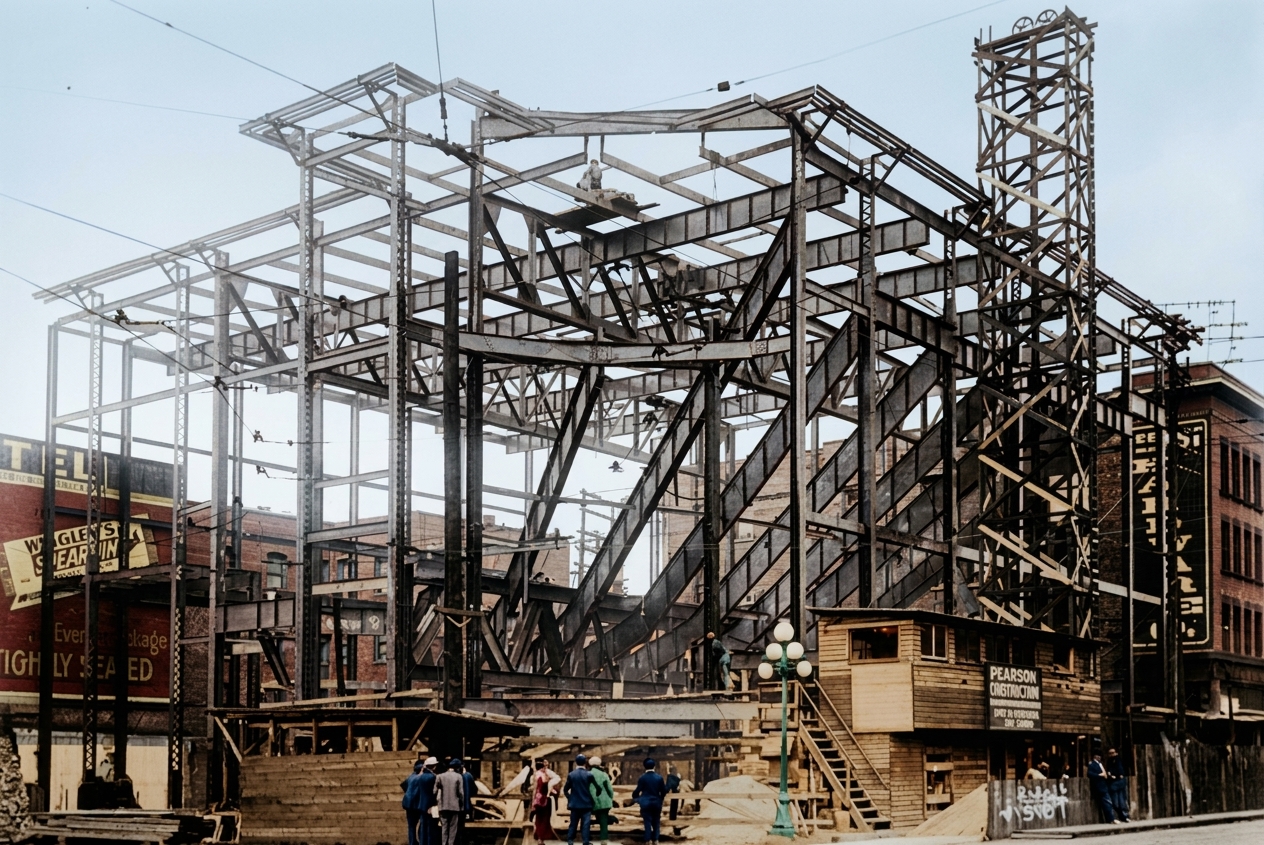
Early construction: the steel framework and foundation rise at 5th and Pike.
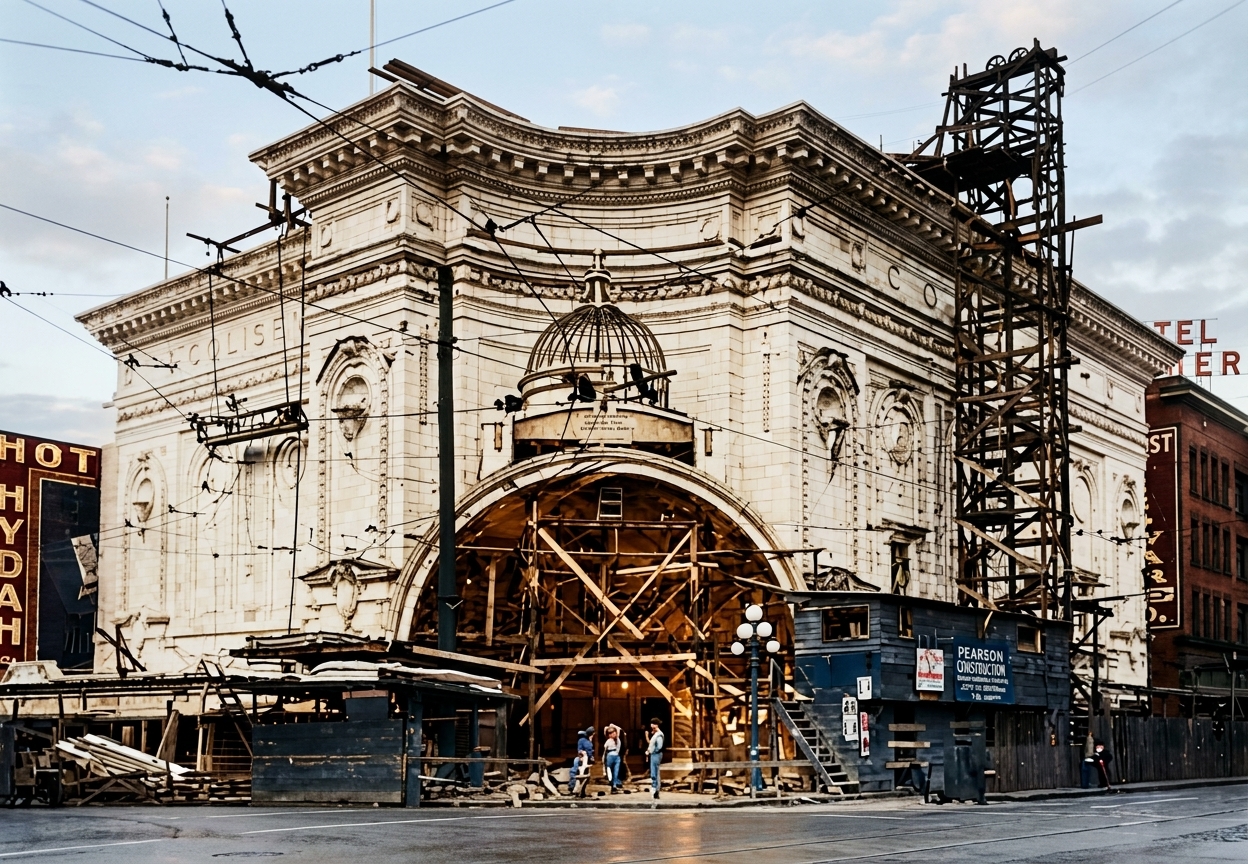
The building takes shape as the exterior walls and architectural details emerge.
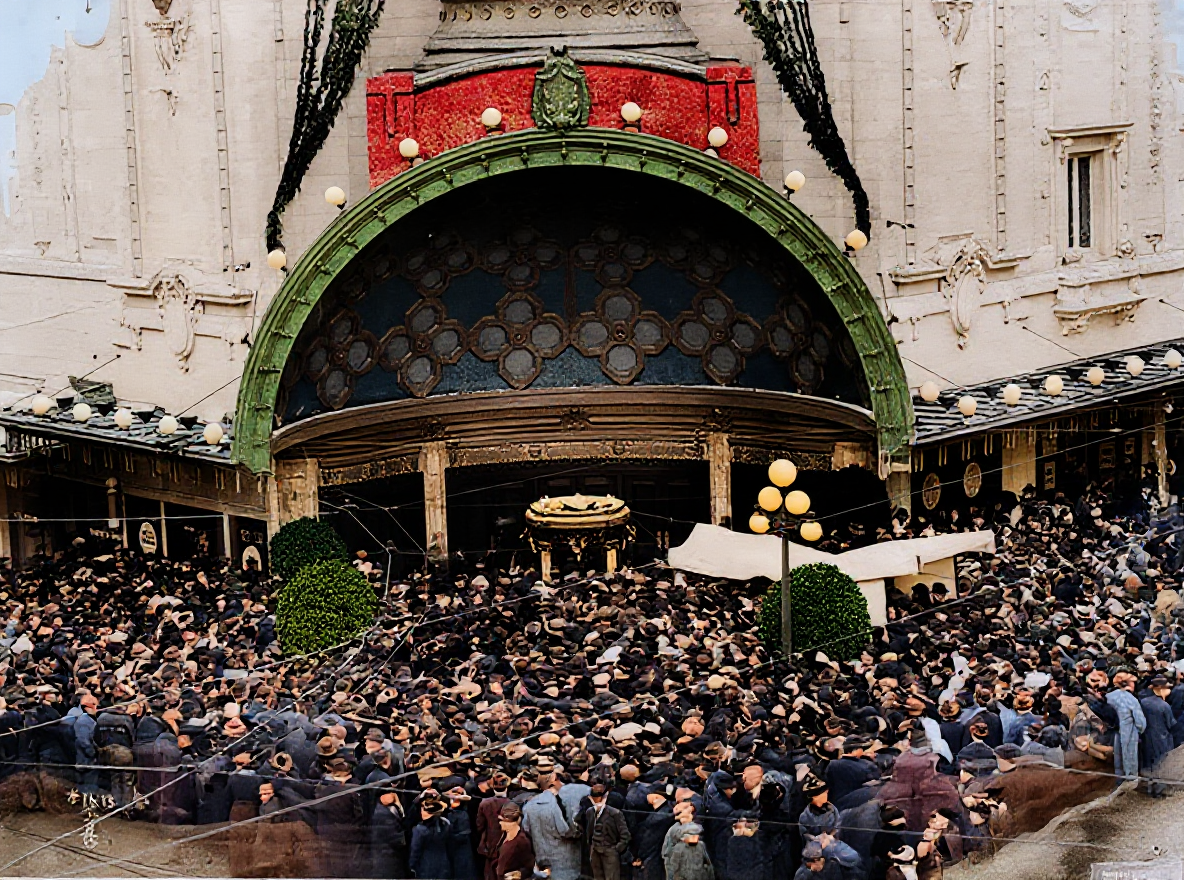
Opening night crowds at the entrance, with the new Beaux-Arts terracotta facade behind them.
In its early years the Coliseum was the premier picture palace on the West Coast, playing silent films and major live productions to standing-room crowds.
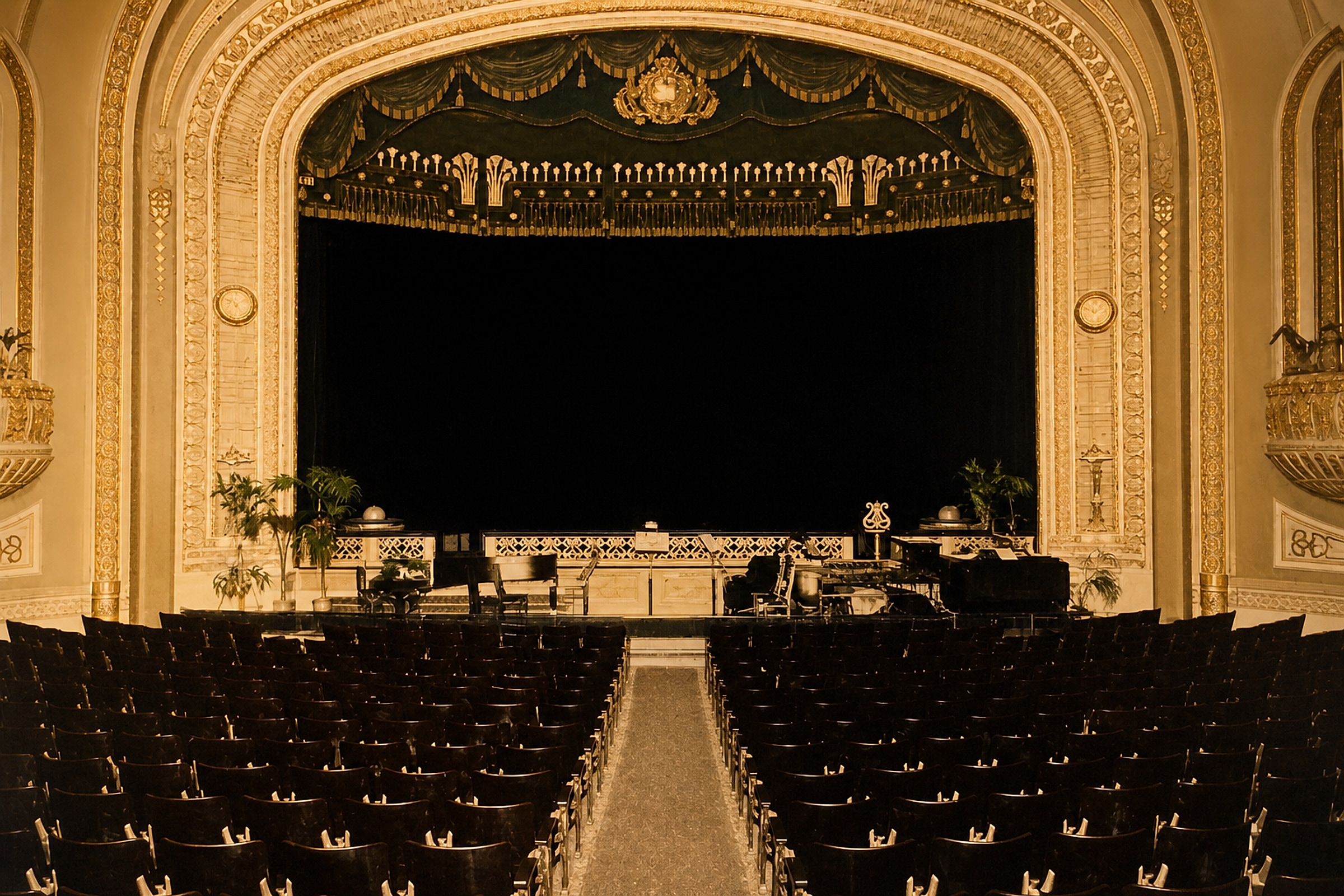
The original interior in its first decade. Balcony, ornate ceiling, and Priteca’s full Beaux-Arts plasterwork.
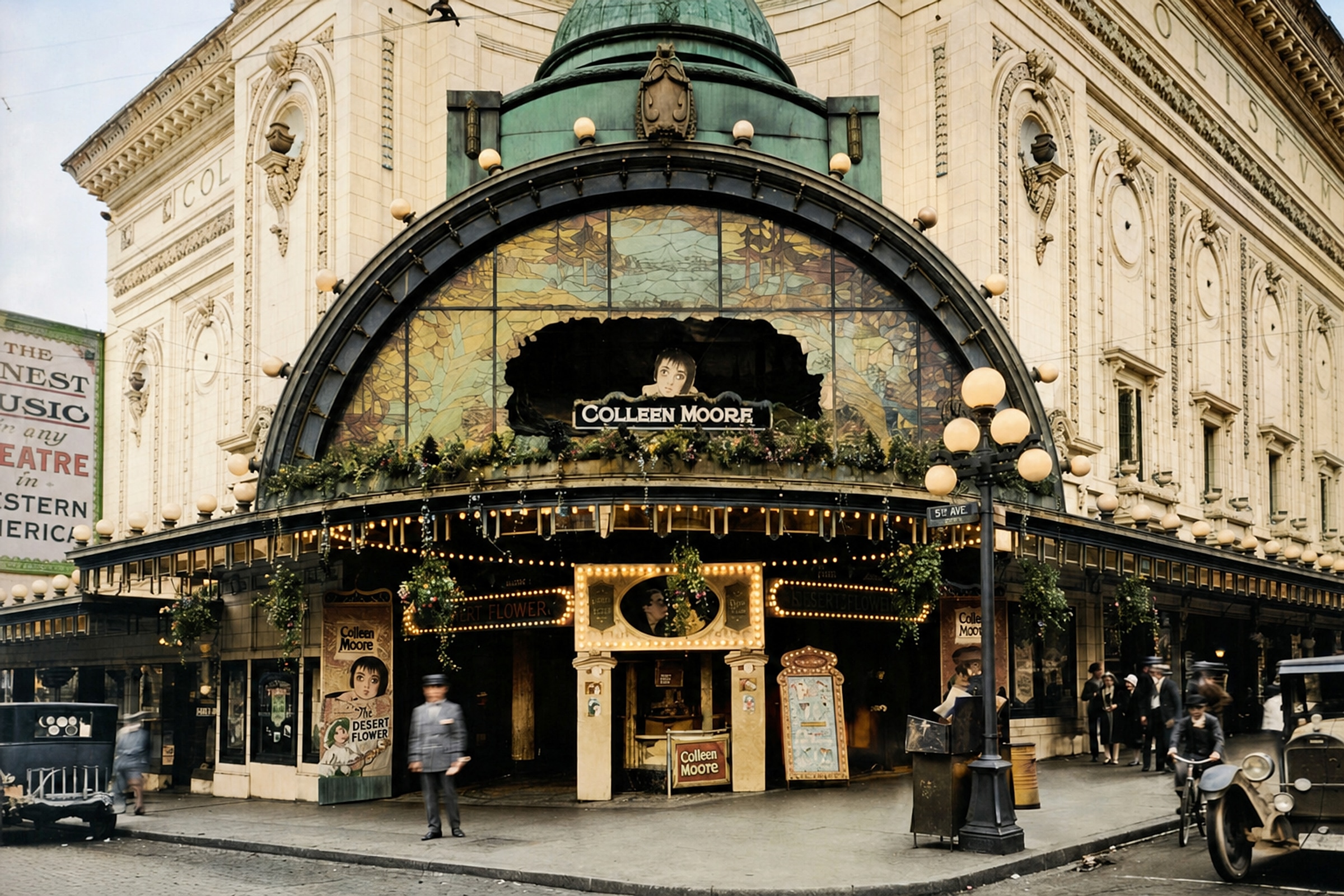
The Coliseum ran major silent film stars like Colleen Moore, one of the biggest draws of the decade.
In the late 1980s the theater closed. During the 1990s conversion (most likely the Banana Republic buildout) much of the original Priteca ornament was stripped and covered.
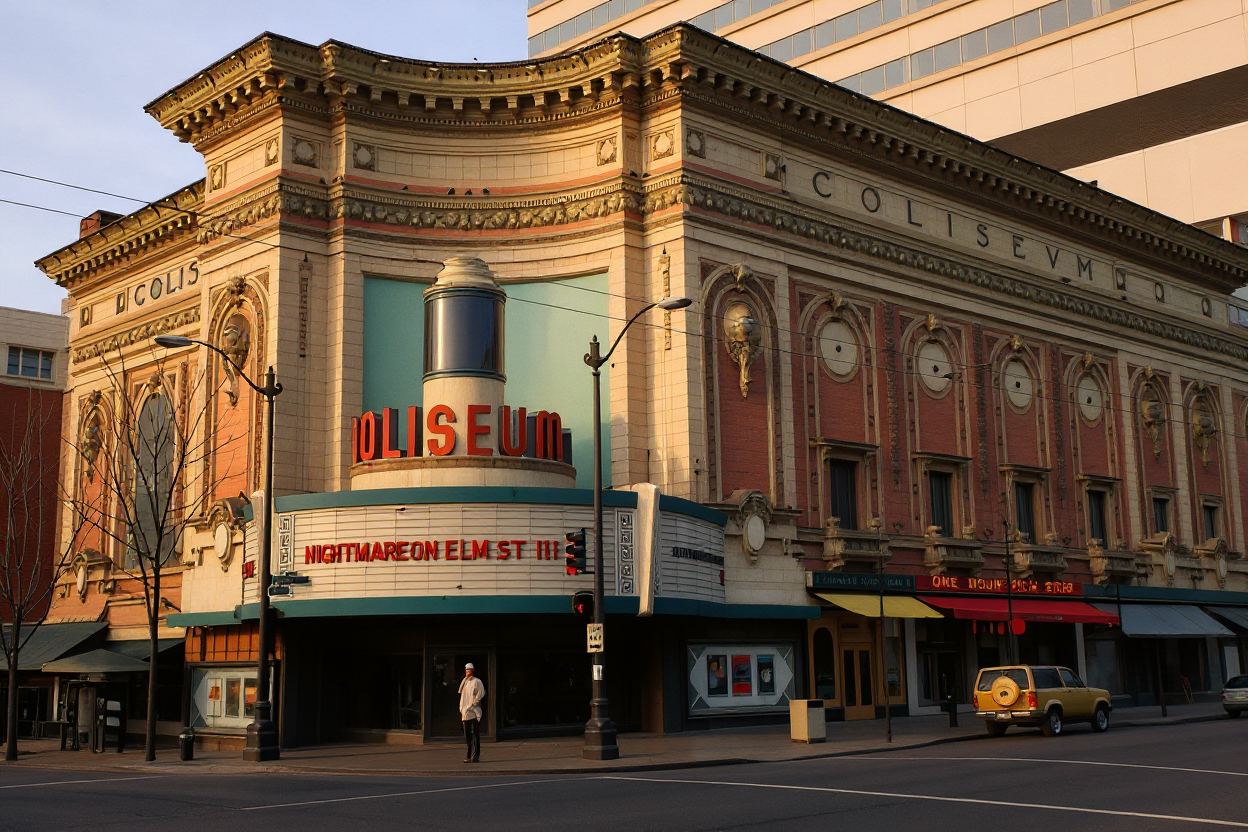
The building just before the retail conversion, still showing its theater character.
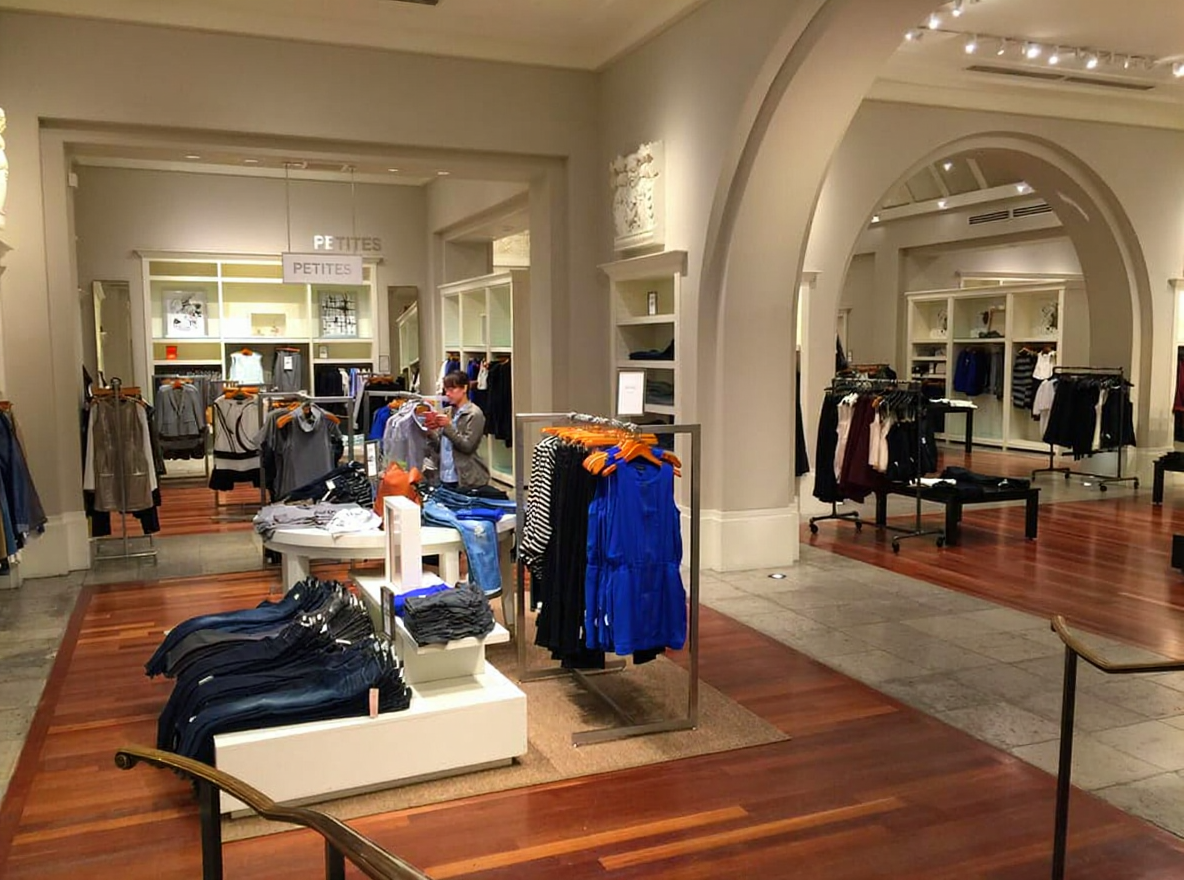
The main floor during its retail era. Partitions, a dropped ceiling, and fluorescent fixtures hide everything.
Today, above the drop ceiling, much of the original architecture survives. Fragments of the friezes, the balcony, and the ornate ceiling are all still there, waiting.
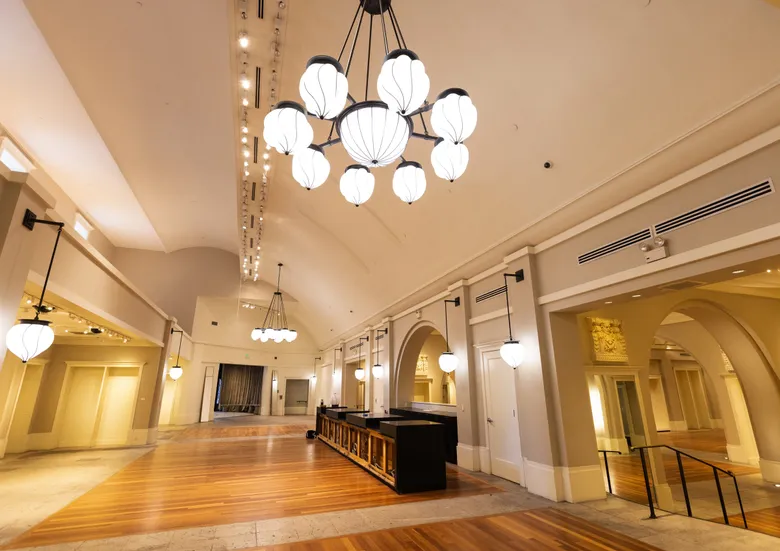
The space today. The drop ceiling is all that stands between a retail store and a 1916 cathedral.
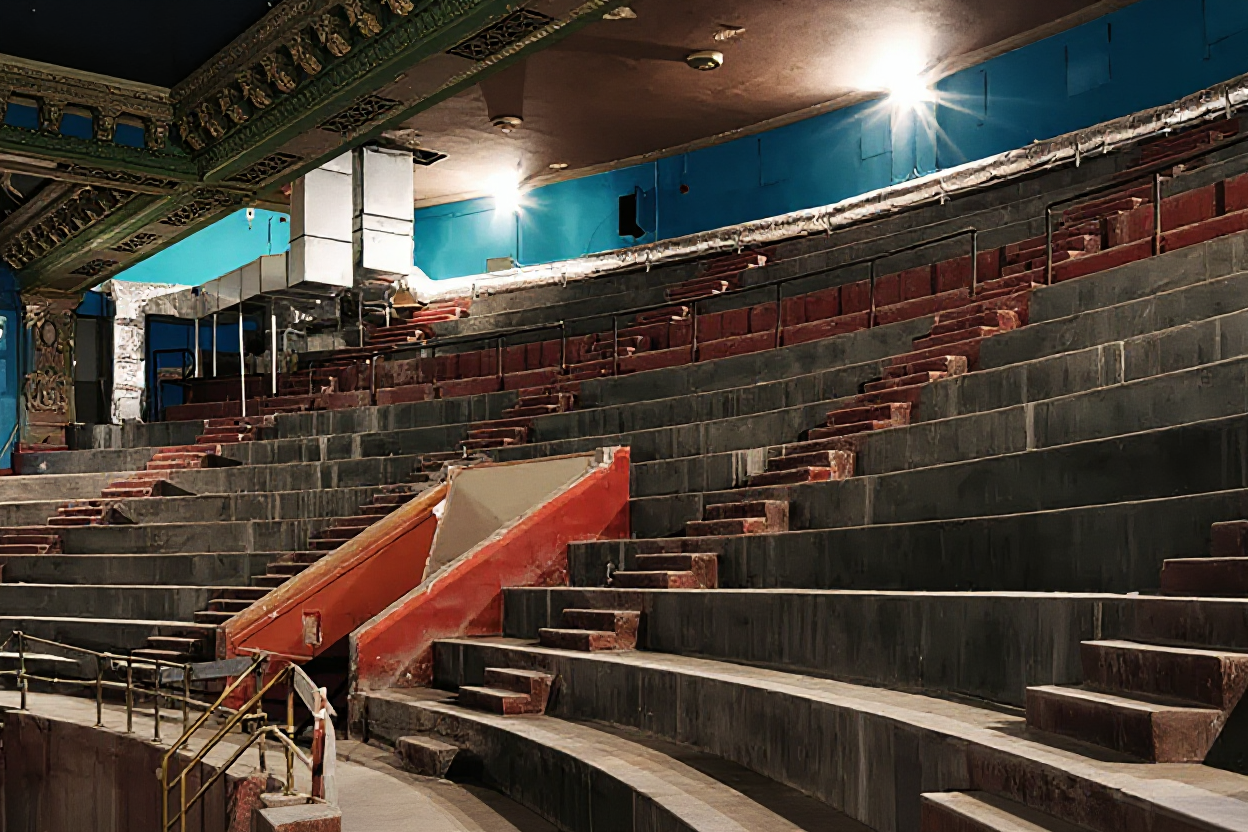
Above the drop ceiling: the original balcony, now filled with HVAC equipment.
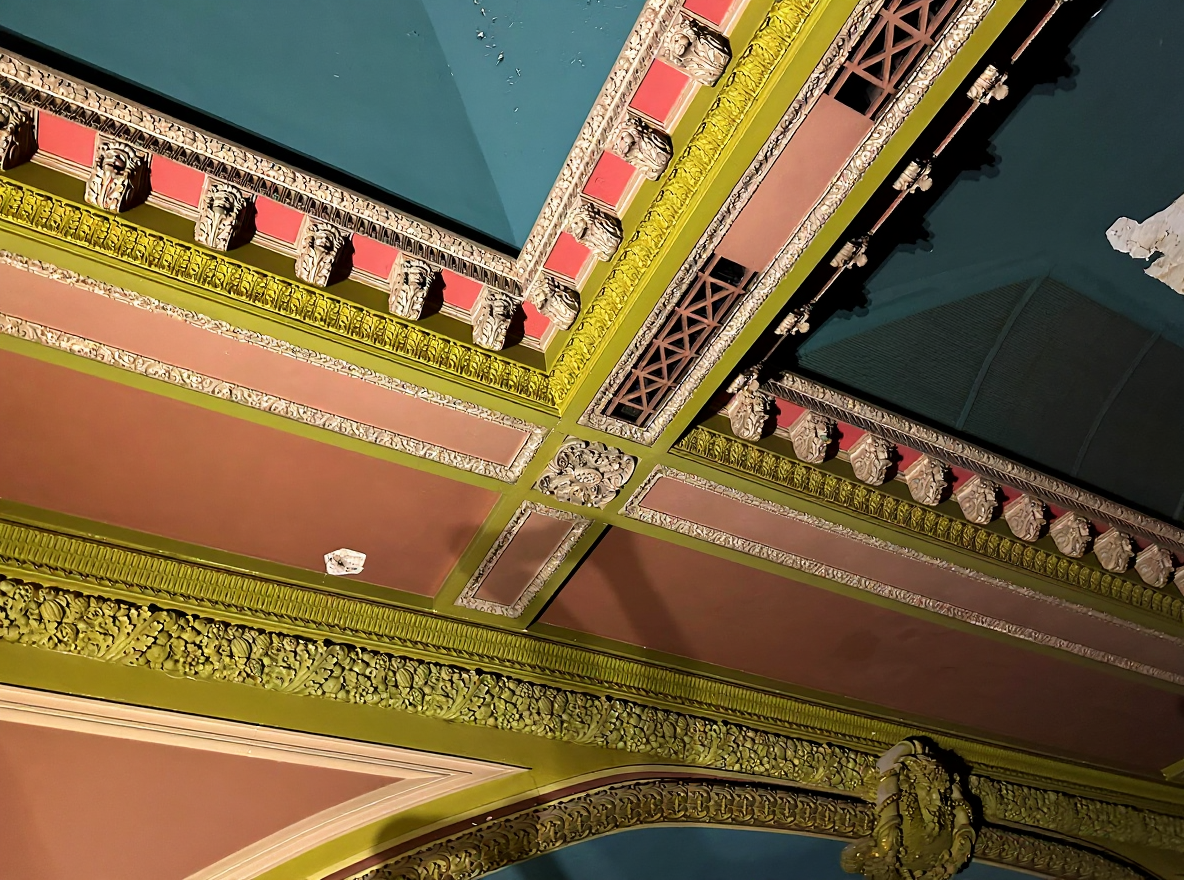
A closer look at the hand-made plasterwork, remarkably preserved above the drop ceiling.
Old black and white photographs of Seattle, colorized and brought back to life, from the years around the theater’s 1916 opening. Touring cars on dirt streets, the Great White Fleet in the harbor, steamships at Smith Cove, the snow on Occidental Avenue, and a few of the same corners as they look today. Same city, same light, a century apart.
Seattle, colorized · archival photographs, restored